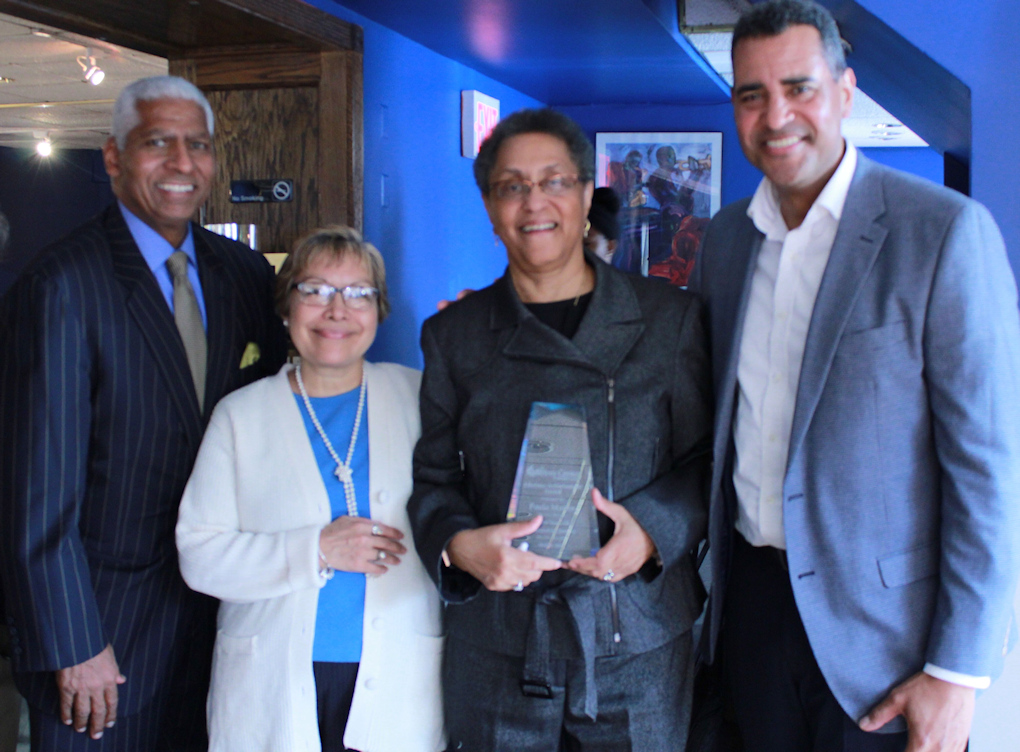
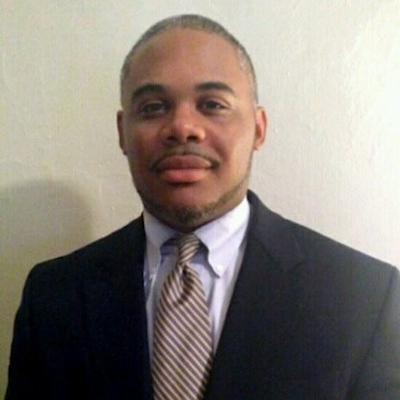
David Perez, Project Director of the HCE’s Educational Opportunity Center, will become the new Executive Director. David has been an integral part of the leadership of HCE for many years.
He joined the HCE Educational Opportunity Center in September 2007. As Project Director he oversaw budget, fundraising, reporting to funding authorities, developing and maintaining partnerships with community-based organizations, participant recruitment, and all E.O.C services. David has also served as both Educational Advisor and Assistant Director at the E.O.C. His main areas of expertise include financial aid, college admissions and post-secondary education transition for adults. David holds a B.A. in History from the State University of New York at Albany and a M.S. in Mental Health Counseling from Long Island University. He is in the doctoral program in Ed.D at Northeastern University.
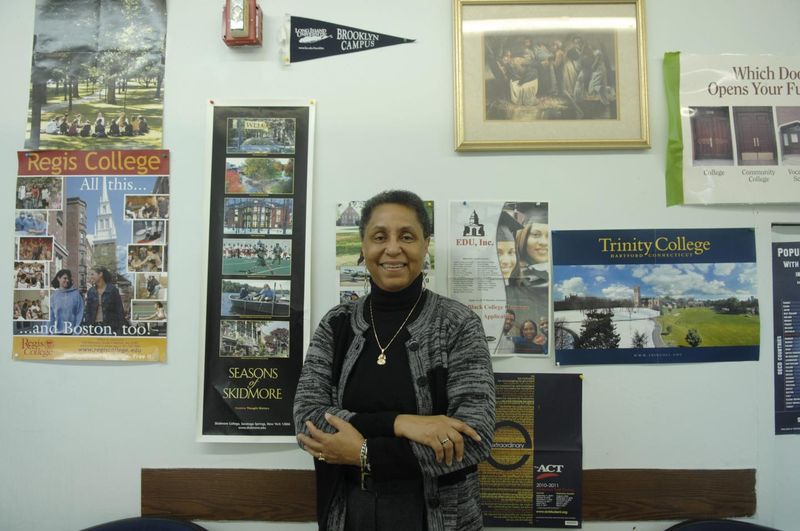
Paula Martin, the long-time executive director of the Harlem Center For Education (HCE) announced her retirement after nearly 47 years of service as in three of the city’s leading educational enrichment programs (Upward Bound, Talent Search and Educational Opportunity Center) serving middle and high school students and adults in the Harlem community. As one of this country’s leading educators and advocates for educational opportunity, Paula has been with the Harlem Center for Education (HCE) since 1985, as Executive Director, a position she has held for 34 years.
Under her leadership, HCE became an educational beacon for young, inner city middle and high school students providing much needed educational services in English, math and science, as well as offering college bound programs and advisement that helped thousands of young people and adults become the first in their families to obtain college admission and degrees.
Under Paula Martin’s leadership, HCE has served over 25,000 low-income youth from the East Harlem and inner city communities in their educational endeavors. Participants assisted by the program have enrolled in over 175 colleges and universities throughout the United States.
A graduate of Syracuse University, Paula began her professional career at Columbia University prior to joining HCE. She was the first female President of her regional association, Association for Equality and Excellence in Education (AEEE),and served on the COE Board of Directors for a number of years. Martin received AEEE’s Award of Excellence in 1984 and President’s Award in 1989. She also received the national association’s (Council for Opportunity in Education (COE) Walter O. Mason award, the COE top award in 2011. In addition, Paula is currently serving on the faculty of Sonoma State University as a trainer of TRIO program directors. She previously served as a trainer with the University of Idaho, University of Washington and COE.
Board chairman Lewis P. Jones said, “Paula Martin has worked tirelessly in the Harlem community and for the tens of thousands of young people who have come through HCE’s doors. She is highly respected for her leadership among elected officials, educational leaders and the students and families she has served over these many years. Paula is a dedicated friend and she will be missed.”
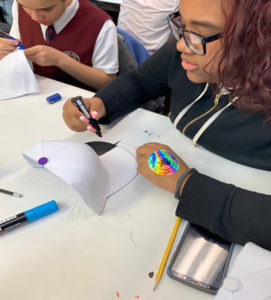
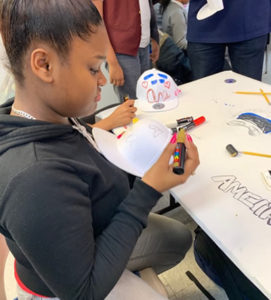
Graffiti-inspired curricula can engage, motivate, and advance every student. Whether you teach in a rural community or bustling city scene, bringing graffiti into the classroom can transform students into artists.
There is significant interdisciplinary content overlap between studies in graffiti and language arts. Concepts such as symbolism, metaphor, and irony are applied to both disciplines. Students can show their knowledge of these concepts through their text and imagery choices.
Just wanted you to know that one of our former students, Rashaun Allen, was just named a Fulbright Scholar. He is a graduate of SUNY Albany and has a Masters of Fine Arts from Stony Brook University from their Creative Writing Program. In fact he is the first Fulbright Scholar from the Creative Writing MFA Program at Stony Brook. Rashaun will be doing research at the University of West Indies Cave Hill campus in Barbados in order to write about his family history. Here is a link to the story: http://www.stonybrook.edu/southampton/mfa/about/news.html#fulbright-allen
By Melissa Klein and Susan Edelman, New York Post, October 9, 2016
The federal government cut off a $500,000 grant for a Harlem program that helped poor kids go to college — because it was doing too good a job.
After 40 years of funding the Harlem Center for Education, the US Department of Education denied the “Talent Search” grant in August. According to the bizarre bureaucratic logic, the program didn’t need money because students were succeeding.
The Harlem Center was forced to fire staff and abandon hundreds of students just as they were preparing their college applications.
“What it means is that over 1,000 students in the East Harlem area . . . will not receive free educational services with respect to helping them graduate from high school, assist them in applying to college and enrolling in college,” said Paula Martin, the program’s executive director.
The grants are meant to fund free SAT prep classes, financial-aid counseling, visits to college campuses, tutoring, access to computers and other services.
Paula Martin in the unused computer room in Harlem Center for Education.
Alumni were shocked that the feds pulled the plug on a program that has helped thousands go to college.
“I think it’s crazy,” said Michell Cardona, 34. “I don’t know where I would be if I had not had that opportunity or not had those resources available to me.”
Cardona said a Harlem Center counselor encouraged her to apply to Cornell University, and she graduated from the Ivy League institution with an architecture degree. She works as an architect and teaches at NYU and CUNY.
“They are really destroying dreams,” said Isaac Torres. He got help from the Harlem Center in the 1980s. He went to law school and is now first vice president and assistant general counsel at Carver Bancorp in Harlem.
The new grant would have continued to pay for services at the Manhattan Center for Science and Mathematics, a 1,600-student high school in EastHarlem, and Murry Bergtraum HS in Lower Manhattan.
Three people working for the DOE vetted the applications and gave points for various criteria, including need. To win a grant, a program needs to score 106 points; the Harlem Center missed with a 100.17 score. Its application was one of 880 submitted.
The grant reviewers took points off the Harlem Center’s application because students at the Manhattan Center had shown academic improvement, Martin said.
One federal evaluator deducted three points for need because those students had a healthy college enrollment and completion rate of 76 percent, documents reviewed by The Post show. The reviewer docked another point because student math scores were too high.
Another reviewer noted that the high school “has 56 percent of students receiving Regents diplomas,” higher than the city average. Another point was deducted.
The DOE last week refused pleas to reconsider, even rebuffing a request by Rep. Charles Rangel. An agency spokesman did not respond to a request for comment.
‘She called the loss of nearly half its funding “huge.” Seven staffers were let go, leaving six employees. Martin’s salary was slashed to $28,000 a year.’
Martin said her program has provided services at the Manhattan Center since the 1980s. The Harlem Center had a $1.2 million budget in the last fiscal year, almost all from government grants.
She called the loss of nearly half its funding “huge.” Seven staffers were let go, leaving six employees. Martin’s salary was slashed to $28,000 a year.
Saud Bukhari, 17, a senior at the Manhattan Center, did SAT prep work with the Harlem Center last spring and summer and was counting on the program to help with his college applications.
“The one [high school guidance] counselor is very overwhelmed with the 435 other seniors,” Bukhari said. “I feel like the Harlem Center is a great second option.”
Manhattan Center senior Leeana Geewanparsud, 17, toured colleges with the Harlem Center last year and was hoping to take additional SAT prep classes this fall as she applies to college.
“Last year’s graduating class also received help. Everybody went to the school they wanted,” said Geewanparsud, a Guyanese immigrant. “Without [Harlem Center], we lose the help and we become lost.”
By Clem Richardson New York Daily News Apr 05, 2012 | 4:00 AM
Paula Martin, executive director of the Harlem Center for Education, heads a program that provides tutors, SAT prep classes, computer training and other educational enhancement offerings for area youths and adults. (Viorel Florescu for New York Daily News)
As Paula Martin was growing up in West Harlem — about six blocks from where she now lives — her mother decided the local schools might compromise her daughter’s future.
Frances Martin served in the Woman’s Army Corps during World War II, and was adamant that the daughter she was raising alone would get the best education she could afford.
“My mother was really insightful and visionary as far as education was concerned, for someone who had not had a lot of education,” Martin recalled of her late mother. “She determined when I was going to elementary school that I would not go to the local public school because the kids in the neighborhood did not seem to be doing well or know a lot.”
Which is why Martin would attend Riverside School, Hunter College High School, Syracuse University and earn a master’s degree from Columbia University Teacher’s College.
Now she’s taken her mother’s message and made it a career. As executive director of the Harlem Center for Education, Martin, 65, and her staff help low and moderate income middle school, high school and adults qualify and prepare themselves for college study.
Harlem Center provides a broad range of free services – SAT preparation courses, computer training, college, career and financial counseling — in its’ 1 E. 104th St. offices and a neighborhood adult outreach center at 2161 Second Ave.
Some 1,000 adults took part in the program last year to either enter college for the first time or to go back and get supplemental training to improve their job prospects, Martin said.
Harlem Center counselors also augment college and career counseling programs at four high schools – Manhattan Center for Science and Math, Norman Thomas High School, the High School for International Business and Finance and the High School of Law and Public Service.
Counselors also work with students at nearby IS 171, getting the middle school students acquainted with testing techniques and even sponsoring field trips to colleges to familiarize the students with the process.
“We run an after-school program at IS 171 Monday through Thursday, where our staff goes to the school and runs a supplemental math and English instructional program for the students,” Martin said. “We provide recreational activities, homework assistance, and take them on trips. We help the students and their parents through the high school selection process.
“We start an early intervention program with them,” she said. “We try to get their heads wrapped around the idea that there is something after high school.”
Together the different Harlem Center programs serve about 1,800 children and about 1,000 adults annually, though Martin noted that cuts in federal grant allocations — federal money makes up about 90% of the Harlem Center’s annual budget – have meant fewer people can be helped.
Martin came to what was then called the East Harlem College and Career Counseling Center in 1985. “I intended to come here just temporarily,” she said. “Here it is 27 years later and I’m still here.”
The board of directors changed the facility’s name to Harlem Center for Education in 1998 to reflect an expansion of the non-profit group’s service area.
Martin made the jump after working as coordinator of the Upward Bound program at Columbia University for 12 years, where she, like the Harlem Center, prepared mostly minority students to enter college and professional life.
“Columbia was frustrating because there were so many layers to go through to get anything approved,” Martin said. “And we could not fundraise with foundations or corporations without approval from the development office. Just about everybody you wanted to approach they would tell you no you can’t because they were already approaching them for their capital campaigns.”
Martin is a child of the ’60s who seldom backed away from protest. A member of the Syracuse Class of 1968, she recalls that she and several other black students sneaked Ku Klux Klan-style white sheets into a hall where then- presidential candidate and avowed segregationist Gov. George Wallace had been invited to address a group of fraternities.
“At one a point during his speech we all put these sheets on and walked out,” Martin said. “As we were walking out all these confederate flags came out in the balcony. That’s when I realized some of the racism that existed in the school.”
She and other Syracuse students, including the late documentarian Saint Clair Bourne, used the black student organization to invite Student Non-Violent Coordinating Committee head Stokely Carmichael to campus.
They also helped persuade the school president to close the college for a day after Martin Luther King Jr.,’s assassination.
After earning a psychology degree, she moved to Columbia University in 1969, where she took part in demonstrations that shut down Teacher’s College to protest U.S. involvement in the Vietnam War.
“Again, it was my mother’s influence,” Martin said. “She was an activist, but not an organizer. But she was one who felt the need that if there was something that was not right you had to participate somehow in making it right.
Martin is a child of the ’60s who seldom backed away from protest. A member of the Syracuse Class of 1968, she recalls that she and several other black students sneaked Ku Klux Klan-style white sheets into a hall where then- presidential candidate and avowed segregationist Gov. George Wallace had been invited to address a group of fraternities.
“At one a point during his speech we all put these sheets on and walked out,” Martin said. “As we were walking out all these confederate flags came out in the balcony. That’s when I realized some of the racism that existed in the school.”
She and other Syracuse students, including the late documentarian Saint Clair Bourne, used the black student organization to invite Student Non-Violent Coordinating Committee head Stokely Carmichael to campus.
They also helped persuade the school president to close the college for a day after Martin Luther King Jr.,’s assassination.
After earning a psychology degree, she moved to Columbia University in 1969, where she took part in demonstrations that shut down Teacher’s College to protest U.S. involvement in the Vietnam War.
“Again, it was my mother’s influence,” Martin said. “She was an activist, but not an organizer. But she was one who felt the need that if there was something that was not right you had to participate somehow in making it right.

 David Perez, Project Director of the HCE’s Educational Opportunity Center, will become the new Executive Director. David has been an integral part of the leadership of HCE for many years.